
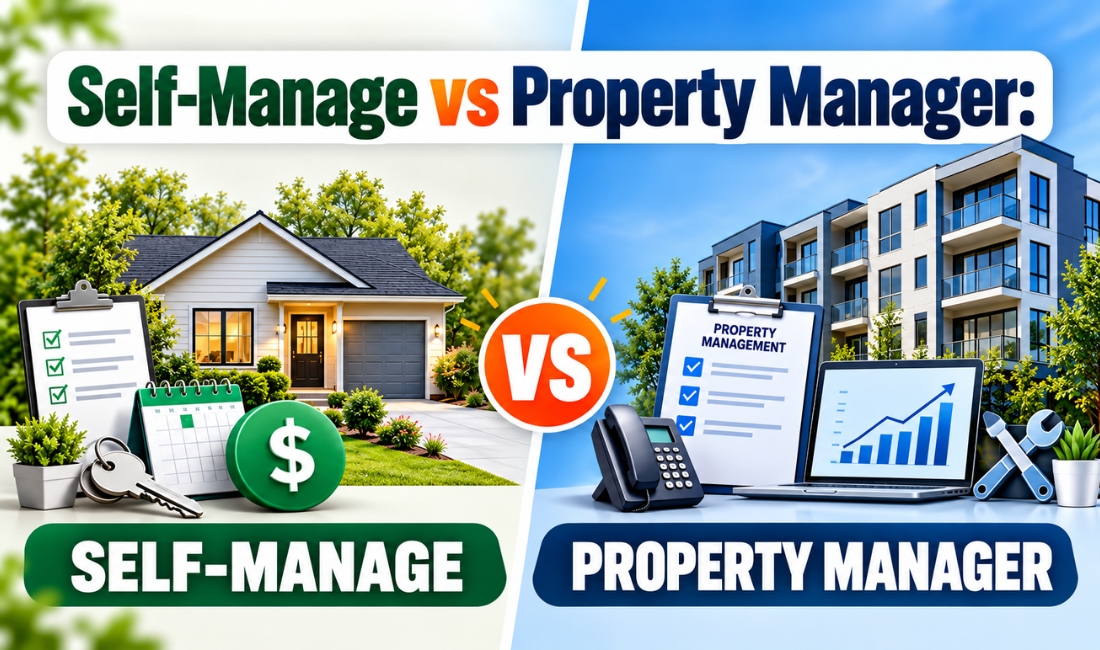
Self-Manage vs Professional Property Management: Which Is Right for You?
Deciding whether to self-manage your rental property or use a professional property manager is an important choice for Australian property owners. Self-management can reduce direct management costs and give you greater control, but it also means taking responsibility for tenants, maintenance, administration and compliance.
Professional property management comes with service fees but can take much of the day-to-day workload off your hands. This guide compares both options across cost, time, compliance, tenant management and control to help you decide which approach suits your circumstances.
Self-Managing vs Professional Property Management: A Quick Comparison
The main difference between self-managing and professional property management is how much of the day-to-day responsibility you handle yourself. Self-management gives you direct control over the tenancy, while professional management delegates many routine tasks to an experienced property manager. Here is a quick comparison of the key differences:
| Factor | Self-Management | Professional Property Management |
| Management fees | No ongoing agent management fee | Ongoing management fees and other charges may apply |
| Time commitment | Higher, as you manage day-to-day tasks | Lower, as many tasks are handled for you |
| Control | Direct control over most decisions | Some day-to-day responsibilities are delegated |
| Tenant communication | You communicate directly with tenants | Property manager is usually the main contact |
| Rent collection | You collect and monitor rent | Manager collects and monitors rent |
| Tenant screening | You review and assess applicants | Manager generally coordinates screening and applications |
| Inspections | You organise and conduct inspections | Manager generally coordinates and conducts inspections |
| Maintenance | You arrange repairs and communicate with trades | Manager coordinates repairs within agreed authority |
| Compliance administration | You manage relevant tenancy requirements yourself | Manager assists with day-to-day tenancy processes and requirements |
| Arrears and disputes | You handle issues directly | Manager generally assists with arrears and tenancy issues |
| Record keeping | You maintain tenancy and payment records | Manager generally maintains day-to-day management records |
| Local market knowledge | Depends on your own knowledge and research | Depends on the manager’s local experience |
What Are the Pros and Cons of Self-Managing?
Self-managing gives property owners direct involvement in how their rental is managed, but it also means taking responsibility for the work that would otherwise be delegated to a property manager. Before choosing this approach, consider both the financial savings and the practical commitment involved.
Pros
- No ongoing property management fee: You avoid paying a regular management fee to an agency, although other costs associated with managing and maintaining the property still apply.
- Direct communication: You can speak directly with tenants about rent, maintenance requests and other tenancy matters.
- Greater day-to-day control: You make management decisions yourself rather than relying on an intermediary.
- First-hand knowledge of the tenancy: Direct involvement can give you a clearer understanding of tenant communication, maintenance issues and the property’s ongoing condition.
- Ability to manage processes personally: You can choose how you organise inspections, records, maintenance and other management tasks, provided you follow the applicable tenancy requirements.
Cons
- Greater time commitment: Advertising, tenant enquiries, rent monitoring, inspections, maintenance and administration can require significant time.
- Direct tenant communication: You need to be available to respond to tenant questions, repair requests and potentially difficult conversations.
- More administration: Keeping tenancy documents, payment records, inspection reports and other records becomes your responsibility.
- Knowledge of tenancy requirements: You need to understand and keep up with the residential tenancy rules that apply in your state or territory.
- Repairs and inspections: You are responsible for coordinating trades, responding to maintenance requests and arranging inspections in accordance with applicable requirements.
- Arrears and disputes: Late rent, breaches or disagreements may require you to communicate directly with tenants and follow the correct processes.
- Challenges for remote owners: Self-management can be more difficult if you live interstate, overseas or a significant distance from the rental property.
What Are the Pros and Cons of Professional Property Management?
Professional property management allows an owner to delegate many of the routine tasks involved in managing a rental property. The value of the service depends on the property, the owner’s needs and the experience and service quality of the property manager.
Pros
- Less day-to-day involvement: A property manager can handle many routine tasks, reducing the amount of time you personally spend managing the tenancy.
- Professional tenant communication: The property manager generally acts as the main point of contact for tenant enquiries, requests and day-to-day issues.
- Rental administration: Managers can assist with applications, tenancy documentation, rent collection, records and other administrative processes.
- Inspection coordination: Routine inspections can be scheduled, conducted and reported to the owner in accordance with applicable tenancy requirements.
- Maintenance coordination: Property managers can receive repair requests, communicate with trades and coordinate approved work within the authority you provide.
- Arrears monitoring: Rent payments can be monitored and appropriate follow-up processes initiated when payments fall behind.
- Local rental-market knowledge: An experienced local manager may provide useful insight into rental pricing, tenant demand and current market conditions.
- Support with tenancy processes: Owners can receive professional assistance with notices, tenancy changes, disputes and other management processes.
Cons
- Management and additional fees: Ongoing management fees apply, while letting, advertising, renewal or other charges may also apply depending on the agency.
- Less direct control: Some everyday communication and decisions are delegated to the property manager rather than handled personally.
- Service quality varies: The experience, responsiveness and workload of individual property managers can affect the level of service you receive.
- Owner oversight is still important: Hiring a property manager does not mean completely stepping away. Owners should continue reviewing reports, expenses, maintenance and overall property performance.
- Agreements require careful review: Management fees, additional charges, included services, authority limits and termination conditions should be understood before appointing an agency.
Which Property Management Option Fits You?
Self-management may suit owners who have enough time for day-to-day tasks, live reasonably close to their property and prefer hands-on involvement. It can work well if you are comfortable communicating with tenants, coordinating maintenance, keeping accurate records and staying across relevant tenancy requirements. You should also consider whether you are prepared to manage arrears or disputes when they arise.
Professional property management may suit time-poor owners, interstate or overseas investors, or those managing multiple properties. It can reduce your administrative workload while providing support with tenant communication, inspections, maintenance, rent monitoring and local market knowledge.
Questions to Ask Before Choosing Between Self-Management and a Property Manager
Before deciding how to manage your property, consider how much time, knowledge and hands-on involvement you can realistically commit. The right approach depends on your circumstances, so asking yourself the following questions can help you compare the responsibilities of self-management with the support offered by a professional property manager.
- How much time can I realistically dedicate to the property?
- How close do I live to it?
- Do I understand my state’s tenancy requirements?
- Am I comfortable screening tenants?
- Can I manage repairs and urgent maintenance?
- Am I comfortable discussing overdue rent?
- Could I manage a tenancy dispute?
- How much is my time worth?
- What would professional management actually cost me?
- What services are included in that fee?
- Do I want direct involvement with tenants?
- Could managing the property myself become harder as my portfolio grows?
Spend Less Time Managing Your Property with Discover Snowy Mountains
Managing a property yourself can offer greater control, but it also requires time, organisation and ongoing attention. If you would rather spend less time handling day-to-day operations, Discover Snowy Mountains can provide professional property management support backed by local knowledge of the Snowy Mountains market.
With Discover Snowy Mountains managing your property, you can benefit from:
- Local market knowledge to support pricing and property performance.
- Guest and booking management to reduce your day-to-day workload.
- Property presentation and listing management to help your property stand out.
- Maintenance coordination to help keep your property ready for guests.
- Ongoing owner support so you stay informed without managing every detail yourself.
- Local on-the-ground management, particularly valuable for interstate or remote property owners.
Your property can remain an important investment without becoming another full-time responsibility. Explore property management with Discover Snowy Mountains and speak with the local team about how they can help manage your Snowy Mountains property.
Recent Posts

Newcastle to the Snowy Mountains: Route, Distance & Travel Guide
Travelling from Newcastle to the Snowy Mountains is a rewarding road trip, but the distance makes thoughtful planning essential. Depending on your destination, the journey to Jindabyne or Thredbo takes most of a day and passes through Sydney, Canberra and Cooma. This guide covers the best driving route, approximate distances, realistic travel times, worthwhile rest […]

12 Best Things to Do in Jindabyne This Summer (2026)
Nestled in the heart of the Snowy Mountains, Jindabyne transforms into a vibrant alpine playground during the summer months. Clear blue skies, crisp mountain air, and sparkling lake views create the perfect setting for outdoor adventure and laid-back relaxation. Whether you’re planning your first visit or returning for another escape, Jindabyne offers an unbeatable mix […]